

How to Air Dry Hoodies Without Stretching
Last Updated: November 14, 2026
Quick Summary
To air dry hoodies without stretching, wash on a gentle 30°C cycle, skip the spin, roll the damp garment in a towel to remove water, then reshape the hood, cuffs and waistband and lay it flat on a mesh rack with airflow. Never wring or hang a wet heavyweight hoodie, as the weight pulls the shoulders out of shape.
- A heavyweight hoodie usually takes six to twelve hours to air-dry indoors.
- Lay the hoodie flat on a mesh rack so the weight spreads evenly across the back panel.
- Point a fan at the room, not the garment, to avoid pushing wet fleece out of shape.
- Reshape the hood, cuffs and waistband while the fabric is still damp so it holds that shape.
- Never hang a wet 530 GSM hoodie, as the weight stretches the shoulder seams.
Table of Contents
- Why Air-Drying Beats the Tumble Dryer for Heavyweight Hoodies
- What You Need Before You Air-Dry a Hoodie
- How to Air-Dry a Hoodie Step by Step
- How Long Should a Hoodie Take to Air-Dry?
- How to Air-Dry Hoodies Without Stretching Overnight
- Fabric-by-Fabric Guidance for Heavyweight and Snow-Washed Hoodies
- Fixing a Hoodie That Has Already Stretched
- Pick a Hoodie Worth Looking After
- Frequently Asked Questions
Why Air-Drying Beats the Tumble Dryer for Heavyweight Hoodies
Heat undoes the shape and warmth that a heavy fabric provides.
Cotton fibres relax when wet and lock into position as they dry.
Air-drying removes the tumbling. The garment dries in the position you set it, and that position is what it keeps.
So why do people still reach for the dryer? Speed.
Want the deeper science on fabric weight and longevity? Read our breakdown of why heavyweight fabric lasts longer.
What You Need Before You Air-Dry a Hoodie
The right kit makes air-drying simple.
- A drying rack. Flat or foldable, with bars spaced wide enough that fabric does not bunch.
- A clean dry towel. For soaking up excess water before drying.
- A hanger with wide shoulders. Not thin wire, which leaves marks.
Skip the radiator. Direct heat on wet fleece can stiffen the fibres and leave the fabric feeling rough.
Choosing a drying rack for air-drying clothes
A drying rack for air-drying clothes should support the full width of the garment, not just the middle. Look for adjustable bars and a flat mesh shelf.
Three things to check before you buy:
- Bar spacing. Wide gaps let air through but can leave creases in heavy cotton.
- Weight rating. A 530 GSM hoodie holds a lot of water. Flimsy racks bow under the load.
- Footprint. A foldable rack fits a small flat or bathroom without blocking the door.
Mesh shelves beat bars for hoodies. Mesh spreads the weight evenly, so the fabric does not droop between the bars. That even support is what stops stretching.
How to Air-Dry a Hoodie Step by Step
Follow these steps in order and your hoodie will dry in shape. The process takes about ten minutes of hands-on work, then several hours of waiting.
- Wash on a gentle cycle at 30°C. Match the care label. A gentle cycle reduces the mechanical agitation that loosens cotton fibres before they dry in shape.
- Skip the spin cycle or use the lowest setting. High spin twists the fabric and pulls the body out of line.
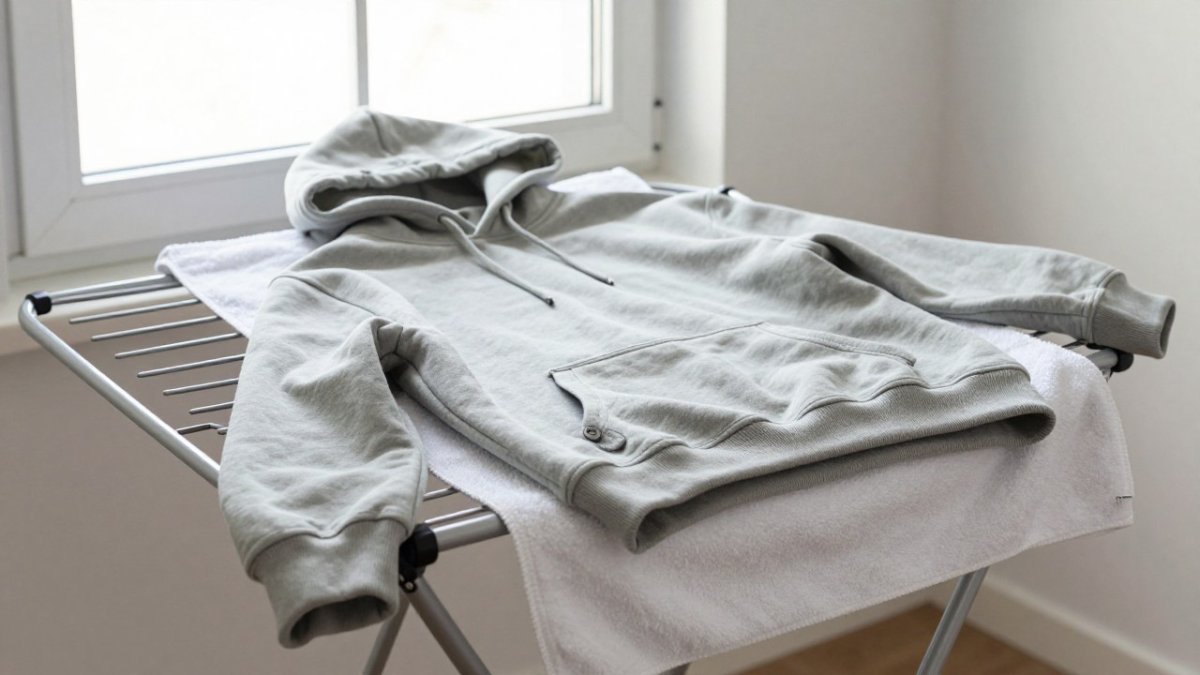
- Lay the hoodie on a dry towel. Smooth it out flat, working from the shoulders down so the back panel is not bunched.
- Roll the towel with the hoodie inside. Press down gently along the roll; the towel absorbs the bulk of the water without wringing.
- Unroll and lift the hoodie out. It should feel damp, not dripping. Repeat with a second dry towel if it is still heavy with water.
- Reshape the hood, cuffs and waistband. Set the garment to its intended shape while the fabric is still damp, because that is when it will hold the shape you set.
- Place it flat on a mesh rack. Leave space around it for air; mesh spreads the weight evenly, so the fabric does not droop between bars.
- Point a fan at the room, not the garment. Moving air dries faster than still air, but direct fan blast on wet fleece can push the fabric out of shape.
- Check after four hours. Turn it once if the underside is still damp, then leave it until the thickest points feel dry.
Removing excess water without wringing
Never wring a hoodie. Wringing twists wet fibres and pulls the garment out of shape before it has a chance to dry.
The towel roll is the safe method.
Repeat with a second dry towel if the first comes out soaked.
Watch out: do not twist the towel roll itself.
For the full washing method that comes before this step, see our guide on how to wash heavyweight cotton hoodies.
Reshaping the hood, cuffs and waistband
These three areas lose shape first. Fix them while the fabric is still damp, because that is when it will hold the shape you set.
- Hood: Open it out, smooth the lining flat and press the seam line straight. A hood that dries folded will keep a crease across the crown.
- Cuffs: Roll each cuff into a neat band and press gently with your palm. Do not stretch the ribbing; ease it back to its resting size.
- Waistband: Lay it flat and straighten any twist along the hem. A twisted waistband dries twisted and is difficult to correct later.
For oversized fits, check our oversized fit guide for men to see what shape the hoodie should return to.
Positioning the hood so it dries without a crease
The hood is the thickest part of most heavyweight hoodies, so it holds water longest and is the easiest place to leave a permanent crease. Open the hood fully and lay it flat against the back panel rather than folded over the shoulders. Smooth any lining separately so both layers dry at the same rate. A hood that dries flat will sit properly; a hood that dries folded will stand up or droop.
Supporting the shoulders and body on the rack
A wet 500 g/m² hoodie is heavy, and placement on the rack decides whether the shoulders hold their line. Lay the hoodie so the shoulder seams sit flat on the mesh, not hanging over an edge. If your rack has bars rather than mesh, position the bars under the chest and waist rather than under the shoulders. Never let a sleeve hang free over the side; fold it gently back alongside the body so its weight does not pull the shoulder seam down.
How Long Should a Hoodie Take to Air-Dry?
A heavyweight hoodie usually takes six to twelve hours to air-dry indoors. A 500 g/m² fleece in a warm, ventilated room lands near the six-hour mark.
Use this as a rough guide:
| Fabric weight | Room conditions | Expected drying time |
|---|---|---|
| 400 GSM cotton | Warm, ventilated | 4-6 hours |
| 500 g/m² fleece | Warm, ventilated | 6-8 hours |
| 530 GSM cotton | Warm, ventilated | 8-10 hours |
| 500 g/m² fleece | Cool, humid | 12-16 hours |
Check readiness by touch, not by clock. The hoodie is dry when the thickest points feel dry: the hood lining, the cuff seams and the waistband fold. If any of those feel cool or damp, give it more time.
Expected air-drying times by fabric weight and room conditions
How to Air-Dry Hoodies Without Stretching Overnight
Drying overnight is the safest option for heavyweight cotton. The garment dries slowly in a stable position, with no one moving it around. Set it up before bed and it will be ready by morning.
Here is the overnight setup:
- Lay the hoodie flat on a mesh rack, fully supported.
- Keep it away from radiators and direct sun.
- Leave a window cracked for airflow, or run a fan on low.
Laying flat versus hanging: what works for 400-530 GSM cotton
Laying flat wins for anything above 400 GSM. Hanging a wet 530 GSM hoodie puts the entire weight of the garment on two shoulder points.
Hanging works for lighter fabrics, and for short spells. If you must hang a hoodie, use a wide-shouldered hanger and support the body with a second hanger underneath.
Flat drying spreads the load across the whole back panel. The fabric dries evenly and the drop-shoulder line stays where it should.
Fabric-by-Fabric Guidance for Heavyweight and Snow-Washed Hoodies
Different fabrics need different handling. A cotton-poly blend dries faster than pure cotton, and a snow-washed finish needs extra care around the frayed details. The table below gives realistic ranges, but treat them as a guide: room humidity, airflow and how much water the towel removed all shift the finish time.
| Fabric | Typical drying time (warm, ventilated room) | Support needed | Readiness check |
|---|---|---|---|
| Cotton-poly fleece, around 500 g/m² | 6-8 hours | Flat on mesh | Cuff seams and hood lining feel dry |
| 100% cotton, 530 GSM | 8-10 hours | Flat on mesh, shoulders supported | Waistband fold and hood crown feel dry |
| 100% cotton, 400 GSM, snow-washed | 4-6 hours | Flat, frayed edges kept straight | Frayed edges are crisp, not cool |
| Printed heavyweight cotton | 6-10 hours depending on weight | Flat, print-side up | Print area feels dry and does not cling |
- Cotton-poly fleece, around 500 g/m²: Dries in six to eight hours. The poly content speeds drying but can make the fabric feel stiff if it dries too fast, so keep the fan on low rather than high. Reshape the cuffs while damp.
- 100% cotton, 530 GSM: Dries in eight to ten hours. Always dry flat. Pure cotton holds more water than a blend, so the towel roll matters more here than on any other fabric in this list.
- 100% cotton, 400 GSM, snow-washed: Dries in four to six hours. Keep hand-frayed edges flat so they do not curl; the finish is distressed by design, but the frayed edges can still dry out of line if they are left hanging over the rack.
Reading the care label before you air-dry
Before any of this, check the care label inside the hoodie. Most heavyweight cotton and cotton-blend hoodies permit air-drying, often shown as a square with a circle inside it crossed out, which means do not tumble dry. If the label shows a tumble-dry symbol with a single dot, low heat is permitted, but air-drying is still safer for shape. If the label says dry flat, follow it exactly; that instruction exists because the manufacturer knows the fabric will stretch on a hanger.
Why fabric weight changes drying time
A 530 GSM cotton hoodie holds more water per square metre than a 400 GSM one, and the water has further to travel to the surface. That is why the heavier garment takes longer even in the same room. A heavyweight fleece can also feel dry on the outside while the inner loop pile is still damp. Check the inside of the hood and cuffs, not just the outer surface; the outer face often dries two or three hours before the inner pile.
Drying-time estimates and readiness checks
Use the table as a starting point, then check by touch rather than by clock. The hoodie is dry when the thickest points feel dry: the hood lining, the cuff seams and the waistband fold.
The UK's love your clothes campaign on extending garment life recommends washing less often and drying carefully, which suits heavy cotton well.
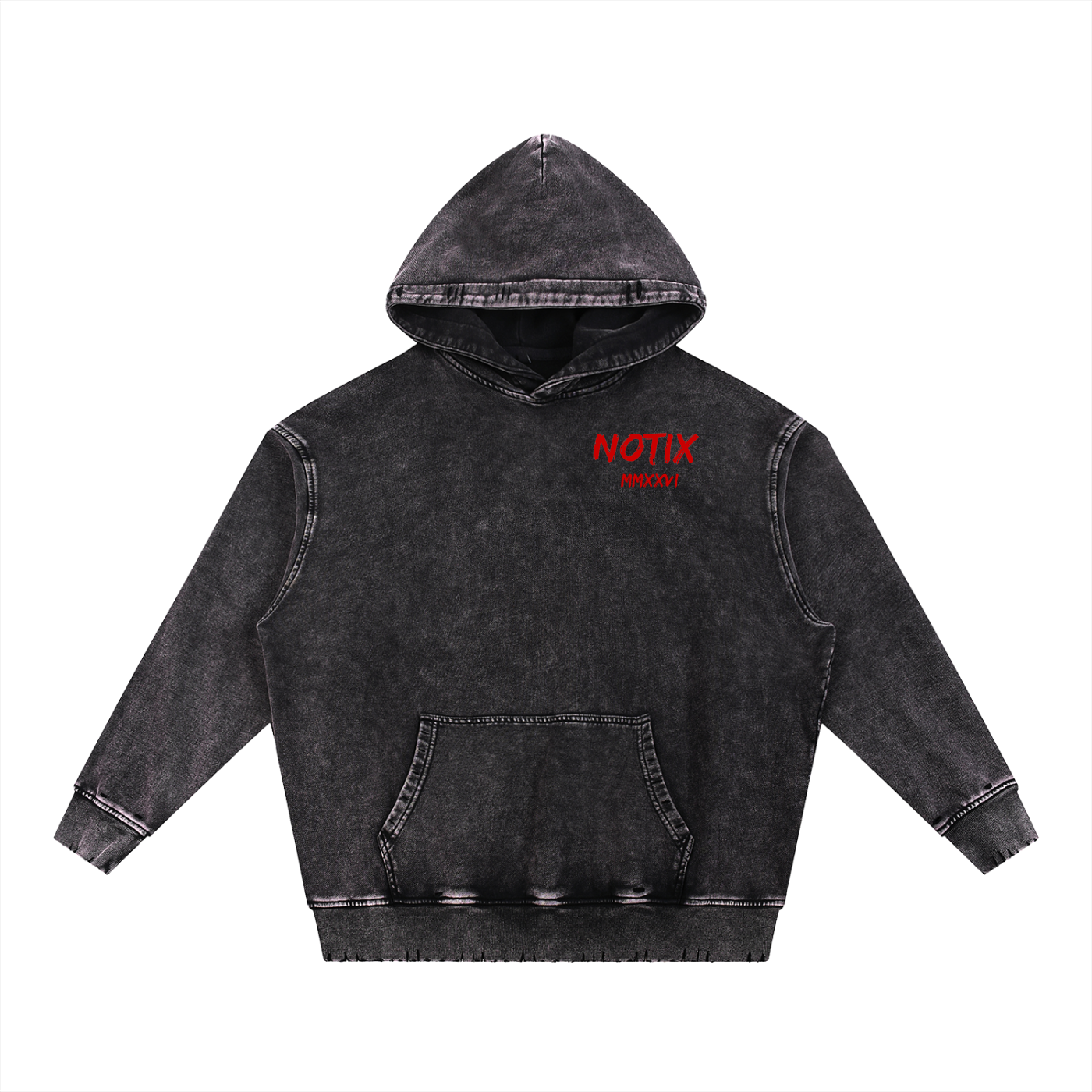
If you own the snow-washed piece, the Notix Brick Snow Wash Hand-Frayed Heavyweight Hoodie is the exact garment this section covers.
Fixing a Hoodie That Has Already Stretched
A stretched hoodie is usually recoverable. The method is simple: wet it, reshape it and dry it flat.
- Wash the hoodie on a cool, gentle cycle.
- Skip the spin.
- Roll it in a towel to remove excess water.
- Lay it flat and pull the stretched areas back to their original size.
- Pin the edges in place on the rack if they keep slipping.
- Dry flat, away from heat.
For stretched shoulders, focus on the shoulder seam. Ease it back to the drop-shoulder line and hold it there while the fabric dries.
Watch out: never try to shrink a stretched hoodie with hot water or a hot dryer. That shrinks the whole garment unevenly and usually makes the fit worse.
Pick a Hoodie Worth Looking After
Care only pays off on a garment built to last. A thin hoodie will lose shape no matter how carefully you dry it.
That is the case for the Notix Essential Heavyweight Hoodie.

We build for people who put the work in and expect their kit to do the same. No Handouts. No Shortcuts.
If your hoodies keep losing shape, the problem is usually the drying method, not the garment.
Frequently Asked Questions
How long should a hoodie take to air dry?
Drying time depends on fabric weight, room temperature and airflow. Heavier cotton-blend fleece and pure cotton take longer than lighter fabrics. Thicker seams at the hood, cuffs and waistband hold water longest, so check those points before you call it dry. Speeding things up with a fan and an open window can shave several hours off that window.
Is it better to hang a hoodie or lay it flat to dry?
Lay a wet hoodie flat for the first few hours, then hang it once it is damp rather than soaked. Hanging a dripping heavyweight hoodie puts the whole water weight on the shoulders, which is exactly how you get shoulder marks and stretched necklines. A flat drying rack spreads that weight evenly. Once the fabric is only slightly damp, a wide hanger on a shower rod or clothesline finishes the job without distortion.
Can you air-dry a hoodie overnight without it stretching?
Yes, if you set it up correctly. Press the hoodie between two dry towels to pull out excess water, lay it flat on a rack with the sleeves and body smoothed into shape, and leave space around it for airflow. Keep the room ventilated with an open window or a fan on low. Check the hood and cuffs before wearing, as heavier fabrics can hold moisture at the seams.
Will my hoodie shrink if I dry it in the dryer?
Cotton-rich hoodies can shrink in a tumble dryer, especially on high heat, and the print can crack too. Notix care labels allow tumble dry on low, but air-drying is the safer route for keeping the oversized silhouette and graphic intact. If you do use a dryer, keep it on the lowest setting and pull the hoodie out while it is still slightly damp, then lay it flat to finish. Never tumble dry a snow-washed or hand-frayed piece on heat.
