

Why Oversized Hoodies Lose Shape and How to Fix It
Last Updated: November 24, 2026
Quick Summary
Oversized hoodies lose shape because heavy fabric moves under its own weight, heat breaks down the fibres, and a loose cut gives the garment nothing to hold on to. Shrinkage, stretching and seam distortion are three separate faults, each with its own fix. Wash at 30°C on a gentle cycle with a low spin and always dry flat.
- Diagnose shape loss by measuring chest width and body length flat before you wash.
- Heavier knits resist creasing better, and 500 GSM and above behaves like proper outerwear.
- A hot wash plus a fast spin is the fastest way to shrink a cotton hoodie and distort seams.
- Air dry an oversized hoodie flat, never on a hanger, to stop the shoulders stretching.
- Store hoodies folded rather than hung, keeping stacks three or four high.
Table of Contents
- Why Oversized Hoodies Lose Shape: The Real Causes
- Fabric Weight, GSM and Fibre Blend: What Holds Its Shape
- How to Wash an Oversized Hoodie Without Losing Its Shape
- How to Air Dry Hoodies Without Stretching Them
- How to Reshape a Hoodie After Washing
- How to Store Hoodies Without Stretching Them
- Choose a Heavyweight Hoodie Built to Keep Its Shape
- Frequently Asked Questions
Why Oversized Hoodies Lose Shape: The Real Causes
Oversized hoodies lose shape because heavy fabric moves under its own weight, heat breaks down the fibres, and a loose cut gives the garment nothing to hold on to.
Here's the part most care guides skip: a baggy hoodie doesn't fail the same way twice. Shrinkage, stretching and seam pull are three different faults with three different fixes.
Below, we break down the causes, the fabric numbers that matter, and the exact wash, dry and store routine that keeps a heavyweight hoodie boxy.
Diagnose It First: Shrinkage, Stretching or Seam Distortion
Diagnose shape loss by measuring before you wash. Lay the hoodie flat, measure chest width and body length, and compare against the size chart. A drop in both numbers means shrinkage.
Each fault has its own signature:
- Shrinkage: shorter body, shorter sleeves, tighter chest. Heat and cotton are usually behind it.
- Stretching: wider shoulders, longer hem, sagging cuffs. Weight and hanging cause this.
- Seam distortion: wavy side seams, twisted hem, pulled neckline. Tension during washing or a poor cut is the cause.
Most hoodies show two of the three at once. Fix the worst one first.
Shape loss isn't one fault but three, and each has its own signature and fix.
| Problem | What you see | Cause | Fix |
|---|---|---|---|
| Shrinkage | Shorter body, shorter sleeves, tighter chest | Heat and cotton | Dampen and ease out, dry flat |
| Stretching | Wider shoulders, longer hem, sagging cuffs | Weight and hanging | Steam, ease back, dry flat |
| Seam distortion | Wavy side seams, twisted hem, pulled neckline | Tension during washing or poor cut | Fix the worst fault first |
Fabric Weight, GSM and Fibre Blend: What Holds Its Shape
Heavier fabric holds shape better, up to a point.
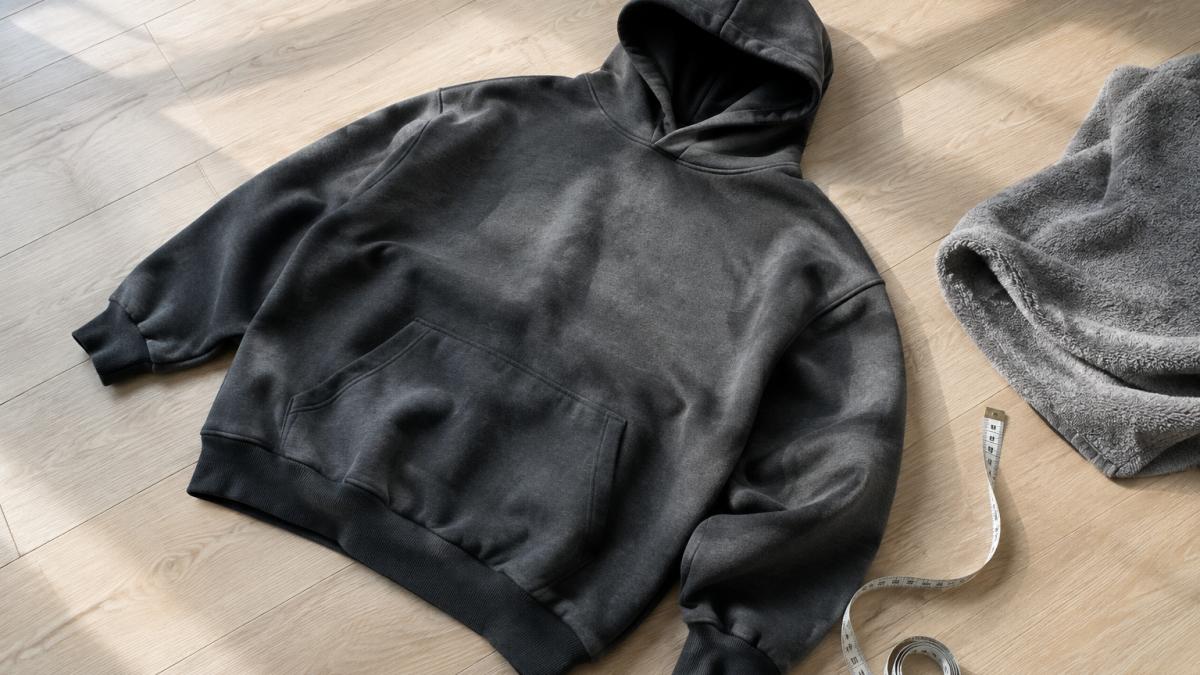
Why does weight matter? Because a heavier knit resists folding and creasing under its own weight.
Fibre blend decides how well the hoodie springs back. Pure cotton is breathable and soft but shrinks with heat.
Want to compare how fabric weight affects durability against fit? Our breakdown of oversized hoodies compared for durability and fit covers the trade-offs directly.
How to Wash an Oversized Hoodie Without Losing Its Shape
Wash an oversized hoodie inside out at 30°C on a gentle cycle with a low spin. That is the short answer, and it is the same answer most care guides give.
Heat and agitation are the two forces that break a heavy knit down. Heat relaxes cotton fibres and encourages shrinkage; agitation works the fabric against itself and against the drum, which loosens the loop structure in fleece and distorts seams. A gentle cycle at 30°C with a slow spin limits both at once.
What each setting actually does
- 30°C, not 40°C: Cotton fleece can shrink noticeably above 40°C, and the effect compounds over repeated washes. A 30°C cycle is warm enough to lift everyday soiling from a mid-layer garment without driving shrinkage.
- Gentle or delicate cycle: This reduces drum action and dwell time. On a heavyweight hoodie the risk is not the fabric tearing but the seams and ribbing being worked loose, and a gentler cycle protects both.
- 600 rpm spin or lower: Spin speed is where most people undo a good wash. A fast spin forces water through the fabric at speed and pulls the garment into creases that dry in place. A slow spin leaves the hoodie wetter, which is why flat drying matters.
- Mild, non-biological detergent: Biological detergents use enzymes that can attack natural fibres over time. A mild detergent cleans without that ongoing stress.
Adjust the routine to the fibre blend
A single routine is a compromise. Cotton, polyester and blends respond differently, and the draft's own fabric section sets up the reason: cotton shrinks with heat, polyester holds memory, and blends trade one against the other.
- 100% cotton (including 400 GSM cotton fleece): The most heat-sensitive option. Keep to 30°C, avoid the tumble dryer entirely, and expect a small amount of shrinkage on the first wash even when you do everything right. Wash less often and spot-clean where you can.
- Cotton-rich blends (roughly 50-60% cotton with polyester): The most forgiving. The polyester content gives the fabric recovery, so a 30°C gentle cycle with a low spin is genuinely low-risk. This is the blend most heavyweight streetwear hoodies use for exactly that reason.
- Polyester-heavy or synthetic fleece: Resists shrinkage but is more prone to pilling and to holding odour. Wash inside out on a gentle cycle and skip heat entirely, because synthetic fleece can distort and even melt at high dryer temperatures.
Watch out: a hot wash plus a fast spin is the single fastest way to shrink a cotton hoodie and distort its seams in one cycle, and the damage is cumulative rather than instant.
The pre-wash check most people skip
Before the first wash, measure the hoodie flat and note the chest width and body length. Wash it once on the routine above, dry it flat, and measure again. That single before-and-after gives you a baseline for your specific garment, so you can tell later whether a change is shrinkage, stretching or simply the fit settling. It takes two minutes and it is the only reliable way to know how your hoodie actually behaves.
How to Air Dry Hoodies Without Stretching Them
Air dry an oversized hoodie flat, never on a hanger. Wet heavyweight fabric is at its heaviest, and gravity will pull the shoulders and hem out of shape within hours.
The method:
- Lay a clean towel on a flat surface.
- Place the hoodie on top and smooth out the sleeves.
- Arrange the hood flat, not folded over.
- Reshape the hem and cuffs while the fabric is damp.
- Keep it out of direct sun and away from radiators.
Hanging a wet hoodie is the mistake most people make. The shoulders stretch first, then the body length follows.
For the full step-by-step method, read our guide on how to air dry hoodies without stretching.
How to Reshape a Hoodie After Washing
Reshape a hoodie while it is still damp, using your hands and the size chart. Once the fibres dry in a position, they tend to stay there, which is why the window between washing and drying is the only real chance you get to correct a misshapen garment.
Most care guides stop at prevention. This section is about recovery, and the method depends on which fault you are dealing with.
Reshaping a shrunken hoodie
Shrinkage is the hardest fault to reverse because the fibres have physically tightened. You can recover some length and width, but not all of it.
- Lay the damp hoodie flat on a clean towel.
- Compare the chest width and body length against the size chart.
- Dampen the shrunken areas with a spray bottle of cool water, focusing on the body and sleeves rather than the ribbing.
- Ease the fabric outwards and lengthways with flat palms, working in small increments rather than one hard pull.
- Pin or weight the edges gently and let it dry flat, undisturbed.
A common pattern is that a cotton hoodie recovers a centimetre or two of length this way but never returns fully to its original measurements. Treat recovery as damage limitation, not a reset.
Reshaping a stretched hoodie
Stretching is more forgiving. The fibres have been pulled, not tightened, so warmth and moisture can help them return.
- Lay the hoodie flat and identify where it has grown: usually the shoulders, the body length or the cuffs.
- Use a steamer or a hot iron held a few centimetres above the fabric, never pressed directly onto fleece, to relax the stretched area.
- While warm and damp, ease the fabric back towards the size-chart measurements with flat palms.
- Let it cool and dry flat in that position.
Watch out: do not iron directly onto the inside of a fleece hoodie, because the heat can flatten the brushed loop structure and leave a permanent shiny patch.
Treating stretched ribbing
Ribbed cuffs, hems and necklines are the first places to bag out, because they take the most repeated strain. A stretched cuff will not recover from reshaping alone. A short blast of steam followed by gentle squeezing, then drying flat with the ribbing arranged straight, gives the best chance. If the ribbing has lost its elastane recovery entirely, no amount of reshaping will bring it back, and that is a construction limit rather than a care mistake.
The measurement check
After reshaping and drying, measure the chest width and body length again against your baseline. If the numbers are still off, repeat the damp-and-ease step once more rather than pulling harder. Two gentle passes recover more than one aggressive one, and they are far less likely to distort the seams.
How to Store Hoodies Without Stretching Them
Store hoodies folded, not hung. A hanger puts all the garment's weight on two points at the shoulders, and heavyweight fabric will stretch there over weeks.
A simple storage routine:
- Fold along the seams, not across the chest print.
- Keep stacks shallow, three or four hoodies high.
- Use a wide shelf rather than a narrow rail.
- Avoid vacuum bags, which crush the ribbing.
- Air out the hoodie before folding it away.
Once it's back in shape, styling does the rest. Our guide on how to style oversized streetwear hoodies shows how to keep the fit looking deliberate.
Choose a Heavyweight Hoodie Built to Keep Its Shape
Our picks:
- Notix Essential Heavyweight Hoodie, 500 g/m² cotton-blend fleece, 53.75% cotton and 46.25% polyester, drop shoulders and an oversized silhouette. £44.99.
- Notix Brick Snow Wash Hand-Frayed Heavyweight Hoodie, 100% cotton at 400 GSM, oversized fit, drop shoulder, with a snow-wash finish and hand-frayed detailing. £49.99.
Both are listed for machine washing at 30°C on a gentle cycle, which fits the routine above.

Shape loss is mostly a care problem, and care is a habit. Wash cool, dry flat, fold instead of hang, and a heavyweight hoodie will keep its boxy cut for years. That's the standard Notix builds to: 500 g/m² fleece, oversized fits and drop shoulders designed to hold their line, not sag into it.
Frequently Asked Questions
Why do oversized hoodies lose their shape after washing?
Heat and mechanical stress are the main culprits. Hot water and tumble drying relax cotton fibres and shrink the fabric, while a fast spin cycle pulls at seams and ribbing. Oversized hoodies lose shape faster because there is more fabric weight hanging from the shoulders and hem, so any weakness in the knit shows up as sagging or a collapsed neckline. Washing at 30°C on a gentle cycle and drying flat prevents most of it.
Can a misshapen hoodie be reshaped?
Often, yes. If the fabric has stretched rather than shrunk, soak the hoodie in cool water, press the excess out against the side of the bath, then lay it flat and ease the shoulders, cuffs and hem back to their original measurements. Let it dry flat, away from radiators. If the garment has shrunk through heat, reshaping will not reverse it, but a cool soak and gentle stretch can recover a small amount of length.
Can hanging a wet hoodie make it stretch?
Yes. A wet heavyweight hoodie can weigh several kilograms, and hanging it from the shoulders pulls the whole garment downwards. The neckline widens, the shoulders drop and the body length increases. Always dry hoodies flat or hang them only once fully dry, and use a wide, padded hanger rather than a thin wire one to spread the load across the shoulder seam.
How do I stop my hoodie from stretching out?
Wash it inside out at 30°C on a gentle cycle, skip the spin where possible, and never tumble dry on high heat. Store it folded rather than on a hanger, and avoid hanging it by the hood. A heavyweight cotton-blend hoodie at 400 GSM or above resists sagging far better than a lightweight one, because the fabric has enough structure to recover after washing.
